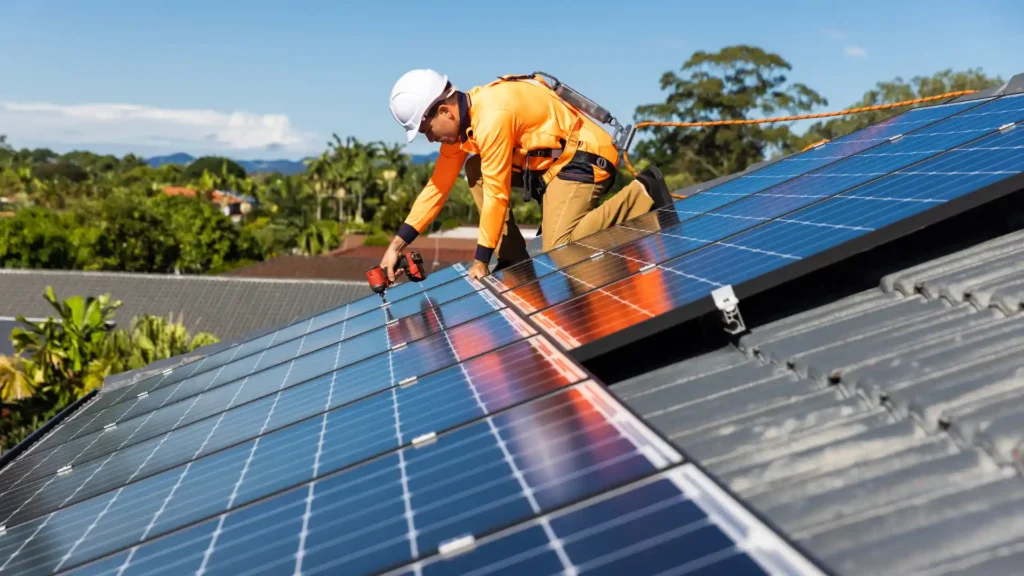
The Tesla solar roof is one of the most advanced residential energy solutions available today. Unlike traditional solar panels that are mounted on top of an existing roof, Tesla’s system replaces your entire roof with solar-generating tiles. This means your roof not only protects your home but also produces clean electricity.
Homeowners are increasingly interested in energy independence, rising electricity costs, and sustainable living. The Tesla solar roof combines modern aesthetics, durability, and renewable energy in a single product, making it one of the most talked-about innovations in home improvement and solar technology.
As solar adoption continues to grow globally, Tesla’s unique approach is changing how people think about residential power generation.
How the Tesla solar roofing system Works (Solar Tiles vs. Steel Tiles, Powerwall Integration)
The Tesla system uses two types of tiles to create a seamless roof appearance:
1. Solar Tiles
These contain photovoltaic cells that convert sunlight into electricity. They are made from tempered glass, which is extremely durable and designed to withstand harsh weather conditions.
2. Non-Solar Steel Tiles
These tiles do not generate electricity but match the appearance of solar tiles. They are installed in shaded or less optimal roof areas to maintain a consistent look.
From the outside, you cannot easily distinguish between the two tile types, giving the roof a clean, uniform appearance that traditional solar panels cannot achieve.
Integration with Tesla Powerwall
One of the biggest advantages is compatibility with Tesla Powerwall, a home battery system that stores excess energy generated during the day. This stored energy can be used:
At night
During peak electricity pricing hours
During power outages
The combination of solar roof + battery storage allows homeowners to reduce reliance on the electrical grid and improve energy security.
Tesla Solar Shingles Cost Breakdown (Per Sq Ft, Per Watt, System Size Estimates)
Understanding the Tesla solar roofing system cost is essential before making a decision. The price varies depending on roof size, design complexity, and energy requirements.
Typical cost estimates in 2026:
-
$20 to $35 per square foot installed
-
$2.50 to $3.50 per watt (solar portion estimate)
-
Average total project cost: $60,000 to $120,000+ before incentives
Several factors affect pricing:
-
Roof pitch and complexity
-
Home location and labor costs
-
Electrical upgrades required
-
Amount of solar tile coverage
-
Battery storage (Powerwall) inclusion
Although the upfront investment is higher than installing traditional solar panels, homeowners should consider that this system includes both a new roof and a solar energy system combined.
For homes already needing roof replacement, the financial comparison becomes more favorable.
What’s Included in the Installation Process (Roof Tearoff, Third-Party Installers, Timelines)
The installation process is more complex than traditional solar because it involves roofing work.
Typical Installation Steps
Online quote and system design
Site inspection and measurements
Permit approvals and documentation
Removal of the old roof
Structural preparation and waterproofing
Installation of solar and steel tiles
Electrical wiring and inverter setup
Powerwall installation (if included)
Final inspections and grid connection
Tesla works with both in-house teams and certified third-party installers, depending onthe region.
Timeline Expectations
Design & permits: 2–6 weeks
Roof installation: 5–10 days
Electrical & battery work: 1–3 days
Final approvals: 1–4 weeks
Total project duration typically ranges from 4 to 12 weeks.
Pros and Cons of the Tesla solar shingles
Pros
✔ Sleek, modern appearance
✔ Durable tempered glass tiles
✔ Dual function (roof + solar system)
✔ Long lifespan compared to shingles
✔ Integration with battery storage
✔ Potential home value increase
✔ Weather resistance (wind, hail, impact)
Cons
✖ Higher upfront cost
✖ Longer installation timeline
✖ Limited installer availability in some areas
✖ Complex roof designs increase price
✖ ROI slower than traditional panels
Tesla Integrated Solar Roof vs. Traditional Solar Panels: Which Should You Choose?
Many homeowners compare solar roofs with conventional panels before deciding.
Tesla integrated solar roof Advantages
-
Premium architectural appearance
-
Full roof replacement included
-
Integrated battery ecosystem
-
Long durability lifespan
-
Higher curb appeal
Traditional Solar Panel Advantages
-
Lower upfront cost
-
Faster installation
-
Proven technology with a large installer network
-
Better short-term financial return
-
Easier maintenance and upgrades
If your roof is new and in good condition, traditional panels are usually more cost-effective. But if your roof needs replacement anyway, the Tesla solar shingles become more competitive.
Federal Tax Credits & Incentives for Tesla solar energy roof
Government incentives significantly reduce net costs for homeowners installing solar energy systems.
In the United States, homeowners may qualify for:
Federal Solar Investment Tax Credit (ITC)
-
Up to 30% tax credit on solar portion costs
-
Battery storage often qualifies
-
No maximum cap for residential systems
Additional benefits may include:
-
State tax incentives
-
Utility rebates
-
Net metering programs
-
Property tax exemptions in some regions
These incentives can reduce the effective cost by tens of thousands of dollars.
Is the Tesla Solar Roof Worth It in 2026?
The value depends on your situation and priorities.
It is often worth it if:
-
Your home needs a new roof
-
You plan to stay long-term (10+ years)
-
You want premium aesthetics
-
You value energy independence
-
Electricity costs in your area are high
It may not be ideal if:
-
Your roof is still new
-
You want the fastest financial payback
-
The budget is limited
-
You plan to move soon
As electricity prices continue rising and battery technology improves, the long-term benefits of solar roofs are becoming more attractive in 2026.
How to Get a Quote (and What to Expect)
Getting a quote is relatively simple:
Visit Tesla’s website
Enter your address and energy usage details
Receive an initial system estimate
Schedule a consultation or inspection
Final design and pricing confirmation
Be prepared for pricing adjustments after inspection, especially if your roof has structural complexities.
Long-Term Savings and Return on Investment
Solar energy systems reduce electricity bills over time. Savings depend on:
Local electricity rates
Solar production levels
Incentives and rebates
Battery usage optimization
Most homeowners see payback periods between 10 and 20 years, depending on conditions.
Beyond financial savings, benefits include:
Protection from rising energy costs
Increased home resale value
Reduced carbon footprint
Backup power during outages
Maintenance and Lifespan Expectations
The Tesla solar roof is designed to be durable and long-lasting.
Key lifespan expectations:
Solar tiles: 25+ years
Powerwall battery: 10–15 years typical lifespan
Roof structure: Comparable to or longer than premium roofing materials
Maintenance requirements are minimal, typically involving:
Occasional inspections
Monitoring system performance via mobile app
Cleaning debris if necessary
Common Questions Homeowners Ask
Is the Tesla solar roof durable?
Yes, the tempered glass tiles are engineered to withstand harsh weather conditions, including hail and high winds.
Does it work during power outages?
Yes, if paired with Powerwall battery storage.
Can it power the entire home?
It depends on system size and energy consumption, but many homes can achieve partial or full energy independence.
Final Thought
The solar roofing technology represents the future of residential roofing and renewable energy. It offers a combination of aesthetics, durability, and energy production that traditional solar panels cannot fully match. While the upfront investment is significant, the system can deliver long-term savings, energy independence, and increased home value for homeowners planning to stay long-term.
If you need a new roof and want a premium clean-energy solution, Tesla’s solar roof is one of the most advanced options available in 2026.
If you’re considering upgrading your home with a solar roofing system or want to explore your options, feel free to contact us for professional guidance. Our team can help you understand pricing, installation requirements, and whether this solution is the right fit for your property. We’re here to answer your questions and provide a personalized consultation based on your needs.
Join Our Community
Join our community on Facebook, and don’t forget to subscribe to us on YouTube for new content each week.
FAQs
1. What is a solar roofing technology?
A Tesla solar roof replaces your roof with solar tiles that generate electricity while protecting your home, combining roofing and solar energy into one system.
2. How much does a Tesla solar roof cost?
Costs typically range from $60,000 to $120,000+, depending on roof size, complexity, and energy needs before incentives and tax credits.
3. Is Tesla’s solar roof better than solar panels?
It depends. Solar roofs offer better aesthetics and durability, while traditional panels usually cost less and provide faster financial returns.
4. How long does a Tesla photovoltaic roof last?
Tesla photovoltaic roof tiles are designed to last 25 years or more, similar to or longer than premium roofing materials.
5. Is the solar roofing technology worth it in 2026?
It can be worth it if you need a new roof, plan to stay long-term, and want energy independence with modern design and battery integration.