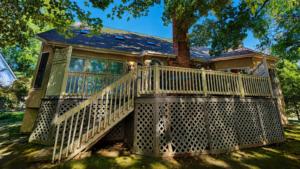
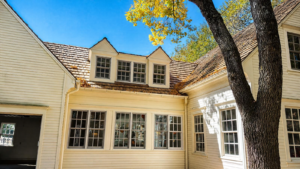
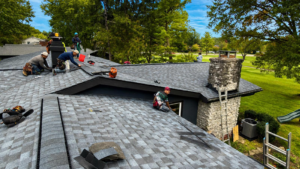
Do the trees around your Mount Vernon home make the yard feel cooler, more private, and more inviting? They probably do. But have you ever wondered what those same branches, leaves, and seed pods are doing to your roof day after day? Trees can be beautiful and beneficial, but they can also create hidden problems that are easy to miss from the ground. A professional tree damage roof inspection can reveal whether overhanging limbs, trapped moisture, clogged valleys, or storm debris are quietly wearing down the roof protecting your home.
Overhanging Branches Can Wear Down Shingles
Branches do not need to fall on your roof to cause damage.
If they touch or brush against shingles during windy weather, that repeated contact can wear away protective granules over time.
Those granules help asphalt shingles resist sunlight and weather exposure. Once too many are lost, the underlying material becomes more vulnerable.
A tree damage roof inspection may reveal:
- Scraped shingle surfaces
- Missing granules
- Cracked edges
- Loose shingles
- Damaged ridge caps
These issues can start small, but repeated branch contact can make them worse season after season.
Fallen Limbs Can Cause Hidden Impact Damage
A large branch crashing through a roof is obvious.
Smaller impacts are not.
A limb may strike the roof hard enough to crack shingles, loosen flashing, or damage decking without leaving a dramatic hole.
After a strong windstorm, a tree damage roof inspection can help determine whether the roofing system took more impact than it appears from the driveway.
That matters because even a minor puncture or cracked shingle can eventually give water a path beneath the surface.
The sooner impact damage is found, the easier it usually is to address.
Leaves Can Trap Moisture Where You Do Not Want It
One of the biggest tree-related roofing problems is leaf buildup.
Leaves tend to collect in:
- Roof valleys
- Gutters
- Behind chimneys
- Around skylights
- Near roof-to-wall transitions
When those leaves get wet, they can hold moisture against the roof much longer than normal.
A tree damage roof inspection can uncover whether damp debris has begun contributing to algae growth, moss, staining, or premature shingle deterioration.
The longer roofing materials stay wet, the more opportunities moisture has to work into weak areas.
Shade Can Slow Down Drying
Shade feels great on a hot summer afternoon.
For a roof, too much shade can be a different story.
Sections of roofing that stay shaded for most of the day often dry more slowly after rain or morning dew.
That can create a consistently damp environment.
Over time, you may notice:
- Moss
- Algae
- Dark streaks
- Organic buildup
- Faster surface deterioration
A tree damage roof inspection can help determine whether these conditions are mostly cosmetic or whether prolonged moisture exposure is starting to affect the roof itself.
Tree Debris Can Clog Gutters and Create Overflow
Your roof depends on gutters to move water away from the house.
When leaves, twigs, and seed pods fill the gutter system, water may overflow instead.
That can affect:
- Fascia
- Soffits
- Siding
- Landscaping
- Foundation areas
A tree damage roof inspection should not stop at the shingles.
It should also consider whether nearby trees are creating drainage problems that put other parts of the home at risk.
Keeping gutters clear is one of the simplest ways to protect both the roof edge and the structure below.
Roof Valleys Are Especially Vulnerable
Roof valleys already handle heavy water flow because they collect runoff from two roof planes.
Add leaves and debris, and that drainage path can become restricted.
That is why tree damage roof inspection services often pay close attention to valley areas.
Contractors may check for:
- Trapped leaves
- Damaged shingles
- Loose flashing
- Granule buildup
- Moisture staining
- Improper drainage
A clogged valley can look harmless from the ground while quietly becoming one of the wettest parts of the roof.
Nearby Trees Can Create Easy Access for Pests
Branches touching the roof can also become pathways.
Squirrels, birds, raccoons, and other animals may use branches to reach your home more easily.
Once on the roof, they may damage:
- Vents
- Soffits
- Fascia
- Shingles
- Roof edges
Some may also search for small openings that lead into the attic.
A tree damage roof inspection can help identify possible entry points and damage around the perimeter of the roof before pests turn a minor weakness into a larger repair.
Winter Can Make Tree-Related Problems Worse
Mount Vernon winters bring cold temperatures, snow, ice, and freeze-thaw cycles.
If leaves or debris are already holding moisture on the roof, that moisture may freeze.
Repeated freezing and thawing can add stress to:
- Shingle edges
- Flashing
- Roof valleys
- Gutters
- Sealants
A tree damage roof inspection before winter can help homeowners identify problem areas before cold weather makes them harder to manage.
That is especially useful for homes surrounded by mature trees.
How Close Should Branches Be to the Roof?
There is no single distance that works for every property, but branches should not scrape the roof or sit directly against roofing materials.
Trimming may be worth considering when branches:
- Touch shingles
- Hang heavily over valleys
- Block gutters
- Rub against chimneys
- Drop constant debris
- Appear dead or unstable
If large limbs need to be removed, it is safer to hire a qualified tree professional rather than attempt the work yourself.
A good tree damage roof inspection can help identify which areas of the roof are being affected so you know where attention is needed.
Tree Damage Can Shorten Roof Life Without You Noticing
The most frustrating tree-related roof damage is often gradual.
It does not always begin with a storm.
It may start with a branch brushing the same shingles for years, wet leaves sitting in one valley every fall, or gutters constantly overflowing after heavy rain.
Over time, these small stresses add up.
That is why routine tree damage roof inspection services can be so useful for properties with heavy tree coverage.
Catching wear early can help reduce the chance that a manageable repair turns into a larger roofing issue.
What Should a Professional Inspection Look For?
A thorough inspection should consider both the visible roof and the areas most affected by nearby trees.
That may include:
- Shingle condition
- Roof valleys
- Flashing
- Gutters
- Fascia
- Soffits
- Decking concerns
- Moisture staining
- Pest access
- Storm impact damage
A professional tree damage roof inspection should give homeowners a clear picture of whether their trees are simply creating normal maintenance needs or contributing to actual roof deterioration.
Beautiful Trees Should Not Become Hidden Roofing Problems
Trees are one of the best features a Mount Vernon property can have.
They provide shade, privacy, curb appeal, and character.
But they should not quietly shorten the life of the roof underneath them.
So take one more look at the trees around your home.
Are branches hanging over the roof? Do valleys fill with leaves every fall? Does one section stay damp longer than the rest? Have storms recently dropped branches or debris onto your shingles?
If you are not sure what condition your roof is in beneath all that shade, that is a good reason to find out.
Schedule a professional tree damage roof inspection with Whitt Roofing & Restoration and make sure the trees adding beauty to your property are not quietly taking years off the roof protecting it.