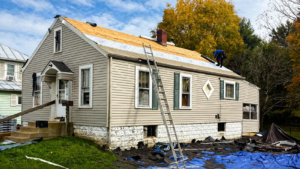
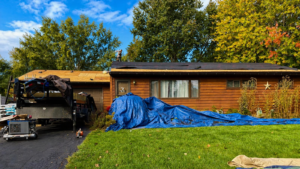
What actually happens after your old shingles are torn off and the wood beneath your roof is suddenly exposed? What if contractors discover soft spots, rot, water stains, or damaged sheathing that you never knew existed? For Mount Vernon homeowners, this is one of the most important stages of a roof replacement because the condition of the decking determines what can safely go back on top. A professional roof decking repair Ohio homeowners can trust helps make sure new shingles are not being installed over hidden problems that could shorten the life of the entire roofing system.
Why Roof Decking Matters So Much
Roof decking, sometimes called roof sheathing, is the structural surface attached to the rafters or trusses beneath the roofing materials.
It supports:
- Underlayment
- Ice and water protection
- Shingles
- Flashing details
- Roofing fasteners
If that surface is weak or damaged, everything installed above it may be compromised.
That is why roof decking repair Ohio projects are not just about fixing a few sheets of wood. They are about restoring the foundation of the roofing system before new materials are installed.
What Contractors Look for Once the Roof Is Open
After old shingles and underlayment are removed, the decking becomes visible.
This is when roofers can finally inspect areas that were hidden for years.
Common problems include:
- Soft or spongy wood
- Water stains
- Rot
- Mold or fungal growth
- Delaminated plywood
- Nail damage
- Previous patchwork
- Structural weakness
A careful roof decking repair Ohio inspection helps determine which areas are still strong enough to remain and which sections need replacement before the project moves forward.
Water Damage Is Often the Biggest Surprise
Many homeowners are surprised to learn that their roof decking has been exposed to moisture even though they never saw an obvious leak inside.
Water does not always drip straight down.
It may travel along rafters, decking, nails, or insulation before showing up on a ceiling.
That means a small flashing leak or damaged shingle may have affected the roof deck for months without any dramatic warning signs.
During roof decking repair Ohio homeowners may discover that the problem started long before the roof replacement was scheduled.
Catching it now is far better than covering it again.
Soft Decking Should Never Be Ignored
If the roof deck feels soft underfoot, that is a clear sign something is wrong.
Healthy decking should feel solid and stable.
Soft areas may indicate:
- Moisture damage
- Rot
- Delamination
- Structural deterioration
New shingles should not be installed over those conditions.
A quality roof decking repair Ohio project removes weakened material and replaces it with sound decking that can properly hold nails and support the new roofing system.
That step may add work to the project, but skipping it can lead to much more expensive problems later.
Why Fasteners Depend on Strong Decking
Shingles rely on properly driven roofing nails to stay secure.
If those nails are driven into weak, rotten, or deteriorated wood, they may not hold the way they should.
That can reduce resistance to wind and increase the chance of future shingle movement.
One of the most overlooked benefits of roof decking repair Ohio homeowners invest in is restoring a secure fastening surface.
The stronger the deck, the more reliable the attachment of the roofing materials above it.
Old Leaks Can Leave Lasting Damage
A roof leak may have been repaired years ago, but that does not mean the decking underneath fully recovered.
If moisture sat in the wood long enough, the damage may still be there.
That is why old repair history matters.
Once the roof is opened, contractors may find:
- Darkened wood
- Previous patching
- Staining
- Weak areas around vents
- Damage near chimneys or valleys
A thorough roof decking repair Ohio evaluation looks beyond whether the leak is active today.
The goal is to make sure previous water intrusion has not left structural weakness behind.
Roof Valleys and Penetrations Deserve Extra Attention
Certain areas are more vulnerable than others.
Roof valleys, chimneys, skylights, plumbing vents, and roof-to-wall intersections handle more concentrated water flow.
That makes them common locations for hidden decking damage.
During roof decking repair Ohio projects, these areas should receive extra attention because even a small flashing failure can affect the wood beneath.
Replacing damaged decking in these locations before new flashing and shingles go on gives the new roof a stronger start.
Attic Moisture Can Affect Decking From Below
Not all decking damage begins with a roof leak.
Poor attic ventilation can allow heat and moisture to build up beneath the roof.
Over time, condensation may form against the underside of the decking.
That can contribute to:
- Mold
- Wood deterioration
- Damp insulation
- Rusted fasteners
This is why a roof replacement should include more than a surface inspection.
A complete roof decking repair Ohio evaluation may also reveal whether attic ventilation or insulation issues are contributing to the problem.
Fixing the decking without addressing the moisture source can allow the same damage to return.
How Much Decking Needs to Be Replaced?
Not every roof needs a full redeck.
Sometimes only a few localized sections are damaged.
Other roofs may have widespread deterioration that requires more extensive replacement.
The amount depends on:
- Age of the roof
- Leak history
- Ventilation
- Storm exposure
- Installation quality
- Condition of the wood
A trustworthy roof decking repair Ohio contractor should explain what was found and why replacement is recommended.
Homeowners should not be left guessing.
What Happens After Damaged Decking Is Repaired?
Once damaged decking is removed and replaced, the roof can move into the next phase.
That usually includes:
- Installing underlayment
- Applying ice and water protection in vulnerable areas
- Replacing or installing flashing
- Preparing roof edges
- Installing new shingles
- Completing ridge and ventilation details
This sequence matters.
A professional roof decking repair Ohio project gives every layer above it a stable, dry, secure foundation.
Skipping that preparation may leave hidden weaknesses underneath a roof that looks brand new.
Why This Stage Can Save You Money Later
Decking repair may feel like an unexpected expense during roof replacement.
However, dealing with damaged wood while the roof is already open is usually far more efficient than discovering the problem after new materials have been installed.
Ignoring weak decking may lead to:
- Premature shingle failure
- Roof leaks
- Interior water damage
- Mold remediation
- Structural repairs
- Early roof replacement
That is why roof decking repair Ohio homeowners invest in should be viewed as protection, not just an extra line item.
Ask to See What Was Found
One of the best things homeowners can do during roof replacement is ask for photos.
If damaged decking is discovered, the contractor should be able to show you:
- Where the damage is
- What caused concern
- What is being replaced
- How the new material will be installed
At Whitt Roofing & Restoration, we believe homeowners should understand what is happening beneath their roofing system.
A clear explanation builds confidence and helps you see why the work matters.
What Is Hiding Under Your Old Shingles?
This is the question most homeowners cannot answer until the roof is opened.
Maybe the decking is in great condition.
Maybe there is a small area that needs attention.
Or maybe years of moisture, aging materials, or poor ventilation have caused more damage than anyone could see from the ground.
That is exactly why roof decking repair Ohio homeowners can trust matters so much during a roof replacement.
Before new shingles go on, ask yourself this: if the wood underneath is not solid, dry, and secure, how long can the roof above it truly perform? Schedule your roof inspection with Whitt Roofing & Restoration and make sure your next roof replacement begins with a foundation built to last.