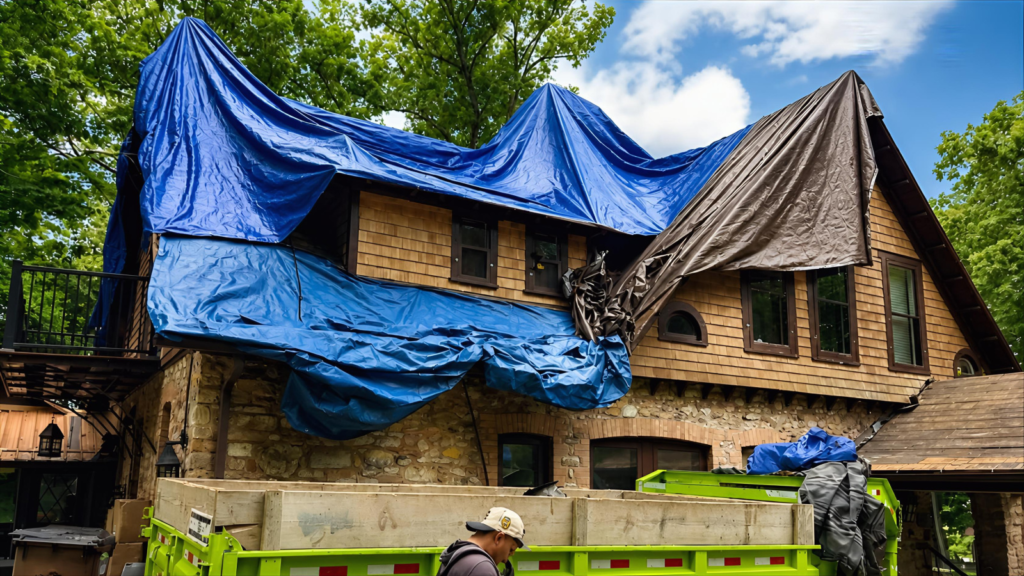
Your roof is covered with a tarp, the storm has passed, and the immediate leak seems under control. So what happens next? Is the tarp actually protecting your home well enough, how long can it stay there, and could water still be spreading somewhere you cannot see? For Mount Vernon homeowners, those questions matter because a tarp is only the first move, not the finished repair. Knowing when to schedule emergency roof repair can mean the difference between correcting one damaged area and discovering weeks later that moisture has reached your decking, insulation, ceilings, or walls.
A Tarp Buys Time. It Does Not Fix the Roof.
This is one of the most important things homeowners should understand after storm damage.
A properly secured tarp is designed to temporarily cover a vulnerable portion of the roof. It may help keep additional rain from entering while you arrange an inspection and permanent repairs.
But underneath that blue or brown covering, the original problem is still there.
You could be dealing with:
- Missing or lifted shingles
- Hail-damaged roofing materials
- Broken flashing
- Punctured underlayment
- Damaged roof decking
- Fallen-tree impact
- Open roof penetrations
- Wind-driven water intrusion
That is why professional emergency roof repair should follow temporary protection as soon as conditions safely allow.
What Should You Do Immediately After the Roof Is Tarped?
First, make sure the severe weather threat has actually passed.
Do not climb onto a wet, damaged, or unstable roof to inspect the tarp yourself. After severe weather, the National Weather Service advises property owners to assess damage only once the threat has ended, stay clear of unsafe structures, and watch for hazards such as downed power lines.
From the ground, look for obvious changes around your property.
You may notice shingles in the yard, damaged gutters, fallen branches, pieces of flashing, or debris around the home’s perimeter.
Then call a qualified local roofing contractor to arrange an inspection.
A timely emergency roof repair evaluation helps determine whether the damage is limited to the visible area or extends farther beneath the roofing system.
The Damage You Cannot See May Matter Most
Here’s where roof emergencies become expensive.
A visible hole or missing section of roofing gets everyone’s attention, but moisture may have traveled beyond that exact spot before the tarp was installed.
Water can move along roof decking, framing members, insulation, and other building materials before a homeowner notices a ceiling stain.
That means the area directly beneath the tarp is not necessarily the only area that needs attention.
During emergency roof repair, an experienced roofer should evaluate surrounding shingles, flashing, underlayment, decking, and accessible interior areas for signs of moisture.
The goal is not simply to cover where water entered. It is to understand how far the damage reached.
Watch the Inside of Your Home Too
After emergency roof tarping, continue paying attention to what is happening indoors.
Watch for:
- New ceiling stains
- Bubbling paint
- Damp drywall
- Musty smells
- Wet attic insulation
- Dripping around light fixtures
- Visible moisture in the attic
If water appears near electrical fixtures or other electrical components, avoid the affected area and contact the appropriate professional.
Do not assume that because the tarp stopped active dripping, everything underneath has dried out.
Good emergency roof repair addresses the roofing damage while also identifying conditions that could lead to further interior damage.
Storm Damage Can Be More Complicated Than It Looks
Mount Vernon roofs deal with changing conditions throughout the year, including thunderstorms, wind, hail, snow, and freezing temperatures.
Hail in particular can damage roofing materials even when the roof has not been torn open. The National Weather Service notes that sufficiently large hail can damage roofs and other property.
Likewise, wind may lift or break shingles without removing an entire section.
This is why an inspection after a roofing emergency should look beyond the dramatic damage.
One missing branch-sized section may be obvious. Loose shingles several feet away may not be.
A detailed emergency roof repair assessment can reveal whether you need a localized repair or whether the storm affected a larger portion of the roofing system.
Will You Need a Repair or a Full Roof Replacement?
Not every tarped roof needs complete replacement.
Sometimes the damage is concentrated in one section and can be professionally repaired.
Other times, the roof may already be near the end of its useful life, or storm damage may be widespread enough that replacement deserves consideration.
Important factors include:
- Age of the roofing system
- Extent of storm damage
- Condition of surrounding shingles
- Roof decking damage
- Previous repairs
- Existing leaks
- Overall roof condition
A trustworthy Mount Vernon roofing contractor should explain what was found and why a particular solution is being recommended.
The purpose of emergency roof repair is to restore dependable protection, not simply make the roof look normal again from the street.
Take Photos and Keep Your Documentation
Once it is safe, document what you can from the ground.
Take pictures of visible storm debris, damaged exterior areas, water stains, and interior moisture. Keep any inspection reports, repair estimates, receipts, and photographs together.
If you plan to contact your homeowners insurance provider, organized documentation can make it easier to explain what happened and what damage was discovered.
Your roofer can document the condition of the roofing system, but coverage decisions ultimately depend on your individual policy and insurance provider.
The most important thing is not to delay emergency roof repair while assuming the tarp can remain your long-term solution.
How Long Should a Roof Tarp Stay On?
Think of a tarp as temporary protection, not a second roof.
Its job is to reduce exposure while a permanent solution is arranged.
Wind, rain, sunlight, and changing temperatures can all place stress on temporary coverings. Fasteners can loosen, edges can lift, and additional roofing damage may develop underneath.
If your home has already required emergency roof tarping, that is a strong reason to schedule a professional inspection rather than waiting until the next storm tests the temporary covering.
Do Not Let Temporary Protection Create False Confidence
This is where some homeowners get caught off guard.
The tarp goes on. The dripping stops. Life becomes busy again.
Days turn into weeks, and because no water is visibly entering the home, the roof no longer feels urgent.
But the damaged roofing materials have not repaired themselves.
A delayed emergency roof repair can leave your home dependent on temporary protection while hidden moisture or weakened materials continue creating risk.
Getting answers early gives you more control over the situation and helps you plan the repair instead of reacting to another leak.
Your Roof Is Tarped. Now Find Out What Is Hiding Under It.
A tarp can protect your home during a stressful moment, but it should also be a warning sign that your roofing system needs professional attention.
So ask yourself this: if that tarp were removed today, would you know whether the wood beneath it is dry and solid, whether nearby shingles are still secure, or whether the next heavy rain could expose a problem you thought was already handled?
If the answer is no, do not wait for another ceiling stain to give you the answer.
Schedule an emergency roof repair inspection with Whitt Roofing & Restoration and find out what your roof actually needs while you still have time to make the decision on your terms.
Maya Angelou wrote, “You may not control all the events that happen to you, but you can decide not to be reduced by them.” You may not be able to control the storm that damaged your roof, but you can control what happens next by taking action before temporary damage becomes a much bigger problem.