Gutters are one of the most important parts of your home’s drainage system, directing water away from the roof, siding, and foundation to prevent costly water damage. However, when gutters clog with leaves, twigs, and debris, they can overflow, sag, and cause serious issues like wood rot and erosion around your foundation. That’s where gutter guards come in.
If you’re tired of cleaning your gutters multiple times a year or dealing with leaks caused by clogs, installing gutter guards can save you time, money, and frustration. But with so many gutter guard types available, choosing the right system for your home can be overwhelming. Each design works differently, with its own pros, cons, price points, and maintenance needs.
In this detailed guide, we’ll break down the top gutter guard types, how each one works, and which systems perform best in Ohio’s climate. We’ll also explain how professional installation from Whitt Roofing & Restoration in Marengo and Mount Vernon ensures your home gets maximum protection and performance from your gutter system.
What Are Gutter Guards and Why Do You Need Them?
Gutter guards—also called gutter covers, leaf guards, or gutter screens—are protective barriers that sit on top of your existing gutter system to keep out debris while allowing water to flow through. They’re designed to reduce the frequency of gutter cleanings and extend the lifespan of your gutters by preventing clogs and standing water.
Ohio homeowners face a mix of challenges that make gutter guards especially valuable. Heavy fall foliage, spring rainstorms, and winter snowmelt can all strain your gutter system. Without protection, gutters fill up quickly with leaves, acorns, shingle grit, and even small branches. Once clogged, water can spill over and cause damage to fascia boards, siding, landscaping, and even your foundation.
The primary benefits of installing gutter guards include:
- Reduced maintenance: Fewer cleanings per year, saving both time and risk.
- Prevention of clogs: Keeps debris out while maintaining proper water flow.
- Protection against rust and corrosion: Keeps gutters dry and free of standing water.
- Extended gutter lifespan: Prevents weight and water-related sagging or warping.
- Home protection: Prevents water infiltration, basement leaks, and ice dam formation.
In short, gutter guards are a simple but powerful upgrade that protects your investment and your peace of mind. But before you install them, it’s crucial to understand the different gutter guard types and which one fits your home best.
The Main Gutter Guard Types Explained
When comparing gutter guard types, you’ll find several designs on the market—each built to tackle debris differently. The five most common systems are: mesh, micro-mesh, screen, reverse curve (surface tension), and brush or foam inserts. Let’s break down how each one works, along with their strengths and weaknesses.
1. Mesh Gutter Guards
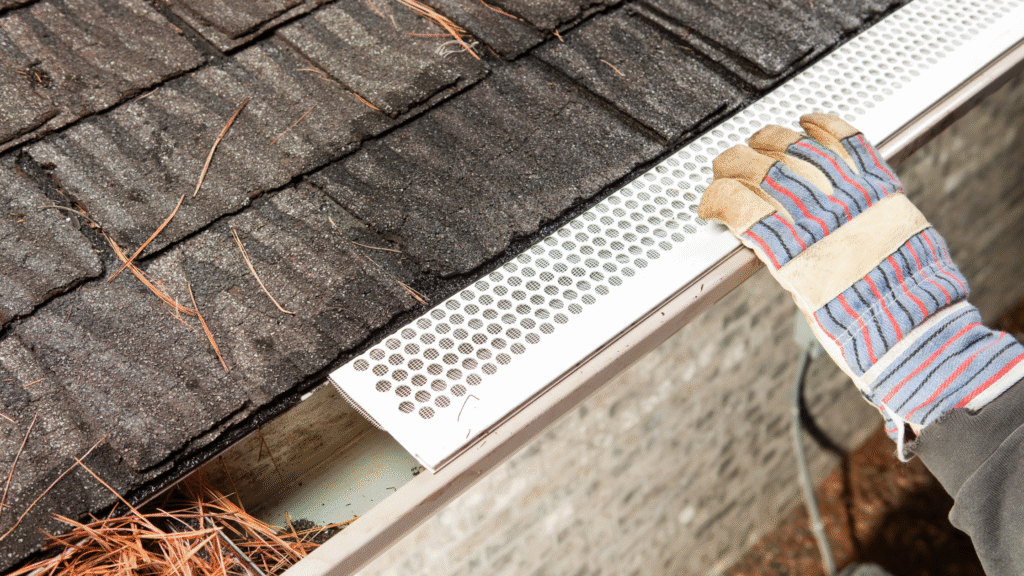
Mesh gutter guards are made from sheets of metal or plastic with small holes that block debris while allowing rainwater to flow through. They’re attached directly on top of your gutters, often sliding under the first row of shingles for a snug fit.
Pros:
- Affordable and widely available.
- Easy to install and remove for cleaning.
- Effectively blocks large debris like leaves and twigs.
Cons:
- Small debris (pine needles, shingle grit) can still get through.
- Mesh can bend or pull loose over time.
- May require occasional brushing or rinsing to prevent buildup.
Best for: Homes surrounded by deciduous trees that shed large leaves but not fine debris.
2. Micro-Mesh Gutter Guards
Micro-mesh guards take the standard mesh concept to the next level. These use ultra-fine stainless-steel or aluminum screens that can filter out even the smallest particles—like pine needles, roof grit, and pollen.
Pros:
- Blocks nearly all debris, even fine dirt.
- Low maintenance; rarely needs cleaning.
- Extremely durable, especially when made from stainless steel.
- Performs well in heavy rain and snow conditions common in Ohio.
Cons:
- Higher upfront cost than other gutter guard types.
- Professional installation recommended for proper slope and alignment.
Best for: Homes surrounded by pine trees or heavy foliage, or those seeking the most low-maintenance option.
3. Screen Gutter Guards
Screen guards are one of the oldest and simplest gutter guard types. Made of wire, plastic, or aluminum, they’re installed over the top of your gutters and act like a sieve, keeping out large debris while letting water through.
Pros:
- Budget-friendly and easy to find at hardware stores.
- Simple to install as a DIY project.
- Easy to remove for seasonal cleaning.
Cons:
- Less durable; may warp or blow off in strong winds.
- Can become clogged with small debris or seeds.
- Frequent maintenance required in wooded areas.
Best for: Homeowners on a tight budget or those with minimal tree coverage around their property.
4. Reverse Curve (Surface Tension) Gutter Guards
This is one of the more advanced gutter guard types. Reverse curve guards use surface tension to guide rainwater around a curved edge into the gutter while deflecting leaves and debris off the roof. They’re typically made from metal or rigid plastic and attach directly to your roofline.
Pros:
- Highly effective at self-cleaning; debris slides right off.
- Handles heavy rainfall efficiently.
- Long-lasting and low maintenance once installed.
Cons:
- Most expensive style of gutter guard.
- Must be installed professionally to ensure correct angle and water flow.
- May alter roofline appearance slightly.
- Small debris can sometimes stick to the curve, requiring occasional rinsing.
Best for: Homes with steep roof pitches or areas that experience heavy rainfall, where water control and self-cleaning performance are priorities.
5. Brush and Foam Gutter Inserts
Brush and foam guards are unique gutter guard types that fit directly inside the gutter channel. Brush guards resemble oversized bottle brushes that catch debris on top while allowing water to pass through. Foam guards are porous inserts that fill the gutter and allow water to flow through their sponge-like structure.
Pros:
- Extremely easy to install and remove.
- Low-cost compared to other systems.
- Great temporary or seasonal solution.
Cons:
- Debris can still collect on top or inside over time.
- Foam can deteriorate after a few seasons.
- Requires regular cleaning or replacement.
Best for: Homeowners looking for a quick, affordable fix or a short-term solution before upgrading to a permanent system.
By understanding these gutter guard types, homeowners can make informed decisions about what fits their property’s needs, budget, and surrounding environment.
Cost Comparison and Long-Term Value
When evaluating gutter guard types, cost is often one of the biggest deciding factors. But cost alone doesn’t tell the full story—you also need to weigh lifespan, maintenance, and performance.
Installation Costs by Type
| Gutter Guard Type | Material & Installation Cost (per linear foot) | DIY Possible? | Lifespan |
| Mesh | $1.50 – $4.00 | Yes | 5–10 years |
| Micro-Mesh | $5.00 – $12.00 | No (professional recommended) | 20+ years |
| Screen | $1.00 – $3.00 | Yes | 5–8 years |
| Reverse Curve | $9.00 – $25.00 | No | 20–25 years |
| Brush/Foam Inserts | $1.00 – $4.00 | Yes | 3–5 years |
Costs are based on 2025 averages for Ohio homes and may vary depending on roof size, material, and accessibility.
Factors Affecting Total Cost
- Home size and roofline complexity: More linear footage means higher material and labor costs.
- Gutter condition: If your gutters or fascia are damaged, repairs may be necessary before installation.
- Material choice: Stainless steel or copper micro-mesh systems cost more but last decades.
- Professional vs. DIY installation: Professionally installed systems cost more upfront but reduce future maintenance and repair expenses.
Long-Term Savings
While basic systems like mesh or foam inserts have lower upfront costs, they require more frequent cleaning and replacement. On the other hand, premium micro-mesh or reverse curve systems deliver higher ROI by lasting longer and eliminating most maintenance costs.
For Ohio homeowners, where seasonal storms and falling leaves are a yearly battle, the best value often comes from professionally installed micro-mesh gutter guards. These systems withstand snow, rain, and debris without warping or clogging, making them ideal for long-term protection.
Over a 20-year period, homeowners can save hundreds—or even thousands—by avoiding gutter cleanings, water damage repairs, and premature gutter replacements.
How to Choose the Right Gutter Guard for Your Ohio Home
Now that you understand the main gutter guard types, it’s time to determine which one best suits your home and budget. The “best” gutter guard depends on several factors unique to your property and local conditions.
1. Consider Your Surroundings
If your property is surrounded by large maple, oak, or sycamore trees, you’ll want a system that can handle heavy leaf fall, such as micro-mesh or reverse curve guards. For homes with pine or evergreen trees, choose a system that filters fine debris—standard mesh or screen guards may not cut it.
Homes in open areas with fewer trees may only need basic mesh or screen guards to reduce occasional clogging.
2. Evaluate Your Roof Design
Steeper roofs shed water faster, which means your gutter guard needs to handle higher volumes of rainwater. Reverse curve systems excel here because they use surface tension to guide water efficiently into the gutter channel.
Flatter roofs, by contrast, may do well with micro-mesh or mesh guards that provide balanced water intake and debris filtering.
3. Maintenance Preferences
Ask yourself how much maintenance you’re willing to do. If you’d rather never climb a ladder again, invest in a premium system like micro-mesh that virtually eliminates gutter cleaning. If you don’t mind checking your gutters once or twice a year, standard mesh or screen guards may be sufficient.
4. Climate Considerations in Ohio
Ohio’s weather ranges from heavy rain to snow and freezing temperatures. For this reason, avoid plastic or foam systems that can warp, crack, or freeze in the cold. Metal micro-mesh or reverse curve systems hold up best against Ohio’s seasonal extremes.
5. Professional Installation vs. DIY
While it might be tempting to install gutter guards yourself, proper alignment and secure attachment are critical to performance. Improperly installed guards can cause overflow, leaks, or roof damage.
Hiring a professional like Whitt Roofing & Restoration ensures your gutter guard types are installed correctly, aligned for your roof’s pitch, and guaranteed to perform as intended.
6. Warranty and Brand Quality
Not all gutter guard brands are equal. Some budget systems offer limited protection and short warranties, while premium systems provide 20-year or lifetime guarantees. Look for reputable manufacturers and professional installers who stand behind their work.
By weighing these factors, you can narrow down your options and select the most effective gutter guard system for your home’s needs.
Why Choose Whitt Roofing & Restoration for Gutter Guard Installation in Ohio
When it comes to protecting your home, the quality of installation is just as important as the product itself. That’s why homeowners throughout Marengo, Mount Vernon, and surrounding Ohio communities trust Whitt Roofing & Restoration for all their gutter and exterior needs.
1. Expertise in All Gutter Guard Types
Our experienced team has worked with every major gutter guard type, from mesh and micro-mesh to reverse curve systems. We know the strengths and weaknesses of each design and can help you choose the right fit for your home and budget.
2. Professional Custom Installation
We don’t take a one-size-fits-all approach. Every gutter guard system we install is measured, fitted, and secured to your exact roofline to ensure optimal performance and long-term durability. Our installations are designed to handle Ohio’s heaviest rainstorms and snow loads without overflow or leaks.
3. Full Roofing and Gutter Services
Because we’re not just a gutter company, we understand how your roofing, siding, and gutters work together to protect your home. Whether you need gutter guard installation, roof repair, or storm restoration, our team ensures every component functions as a unified system.
4. Honest Pricing and Long-Term Value
We believe in transparency and integrity. You’ll receive a detailed quote upfront—no hidden fees or pushy sales tactics. Our goal is to help you find the best gutter guard solution that provides real value and peace of mind.
5. Local Reputation You Can Trust
As a locally owned and operated business, we take pride in serving our neighbors in Marengo, Mount Vernon, and across Central Ohio. Our reputation is built on quality craftsmanship, reliability, and genuine customer care.
6. Storm Damage Specialists
Ohio weather can be unpredictable. When severe storms strike, our team is ready to provide emergency gutter and roof repairs to keep your home protected. We also assist with insurance claims to make the restoration process stress-free.
When you choose Whitt Roofing & Restoration, you’re choosing more than a contractor—you’re choosing a partner committed to protecting your home for years to come.
Final Thoughts
Investing in gutter guards is one of the smartest home improvement decisions you can make. With the right system, you’ll protect your gutters, roof, and foundation from damage while reducing maintenance and extending your home’s exterior lifespan.
By understanding the various gutter guard types—mesh, micro-mesh, screen, reverse curve, and brush or foam inserts—you can make a confident decision based on performance, budget, and local conditions. For most Ohio homeowners, professionally installed micro-mesh or reverse curve gutter guards offer the best long-term protection and value.
If you’re ready to stop climbing ladders and start protecting your home, contact Whitt Roofing & Restoration today. Our team proudly serves Marengo, Mount Vernon, and surrounding Ohio areas, providing expert gutter guard installation and full exterior restoration services.
Call us today to schedule your free inspection and consultation. Let us help you choose the perfect gutter guard system that keeps your home safe, efficient, and maintenance-free for years to come.