Does your home have a dramatic roofline that looks beautiful from the street but seems almost impossible to walk on? Have you ever wondered whether a steep roof requires different materials, installation methods, or safety precautions than a lower-pitched roof? The answer is yes. For Mount Vernon homeowners, steep slope roofing Ohio projects require a more deliberate approach because roof pitch changes everything from how materials are handled to how flashing, shingles, drainage, and safety systems are managed. A steep roof can offer excellent weather performance, but only when every detail is installed correctly.
What Makes a Roof “Steep-Slope”?
Roof pitch describes how quickly a roof rises compared with its horizontal distance.
The steeper the pitch, the sharper the angle of the roof.
Many residential homes have sloped roofing systems, but houses with steep gables, dormers, cathedral-style rooflines, or multiple intersecting sections can require specialized planning.
For steep slope roofing Ohio homeowners should expect contractors to consider more than simply the square footage of the roof.
The roof’s pitch can affect:
- Crew movement
- Material handling
- Installation speed
- Equipment requirements
- Flashing details
- Waste calculations
- Overall project complexity
That is why two homes of similar size can have very different roofing needs.
Safety Becomes a Much Bigger Part of the Project
Roofing is physically demanding on any house, but steep pitches create additional challenges.
Workers cannot move across a high-pitch roof in the same way they can on a moderate slope.
Professional steep slope roofing Ohio projects may require additional fall protection, roof access equipment, staging, and carefully planned material placement.
This is not an area where homeowners should attempt DIY repairs.
Even something that sounds simple, such as replacing one missing shingle, can become dangerous when the roof angle is severe.
Professional roofing safety is not just about protecting the crew. A well-organized job site also helps protect your landscaping, siding, gutters, vehicles, and other areas around the home.
Shingle Installation Requires Extra Precision
Gravity is constantly working against roofing materials on a steep slope.
That makes proper shingle fastening especially important.
Nails need to be placed according to manufacturer requirements so shingles remain secure through wind, rain, and seasonal temperature changes.
During steep slope roofing Ohio installation, contractors also need to pay close attention to alignment.
Small inconsistencies can become much more visible on large, steep roof planes because homeowners can often see more of the roof from ground level.
Clean lines are not only about appearance. Consistent installation also supports proper water shedding and long-term performance.
Steep Roofs Shed Water Quickly, but Details Still Matter
One advantage of a steeper roof is that rainwater generally moves off the surface quickly.
That does not mean leaks are impossible.
In fact, areas where roof sections intersect still require careful waterproofing.
Roof valleys, chimneys, walls, skylights, dormers, and plumbing vents can all create vulnerable transition points.
A quality steep slope roofing Ohio system needs proper flashing and underlayment around these areas to direct water safely away.
Water moves quickly on steep roofs, so every transition needs to be ready to handle that flow without allowing moisture underneath the roofing materials.
Roof Valleys Deserve Special Attention
Valleys collect water from two roof planes and concentrate it into one drainage path.
On complex, steep-pitched homes, a significant amount of water can move through these areas during heavy Ohio rain.
That makes valleys one of the most important parts of steep slope roofing Ohio installation.
Contractors may use additional waterproofing protection beneath valley areas, along with properly installed valley materials and shingles.
A roofing system can look flawless everywhere else, but one poorly constructed valley can eventually become a source of leaks.
Ohio Snow Adds Another Layer to the Conversation
Mount Vernon homeowners also have winter weather to consider.
Steep roofs tend to shed snow more readily than lower-sloped roofs, but that can create another concern: large amounts of snow may slide from the roof quickly.
Where appropriate, snow retention strategies may need to be considered, particularly on certain metal roofing systems or above walkways and entrances.
Steep slope roofing Ohio homes should also have properly designed gutters, flashing, insulation, and attic ventilation to help manage winter conditions.
Roof pitch alone does not prevent ice-related problems. The entire roofing system must work together.
Underlayment Is Protection You Cannot See
Homeowners naturally focus on shingles because that is what remains visible after installation.
However, the hidden layer beneath the shingles is just as important.
Quality roofing underlayment provides secondary moisture protection if water gets beneath the outer roofing material.
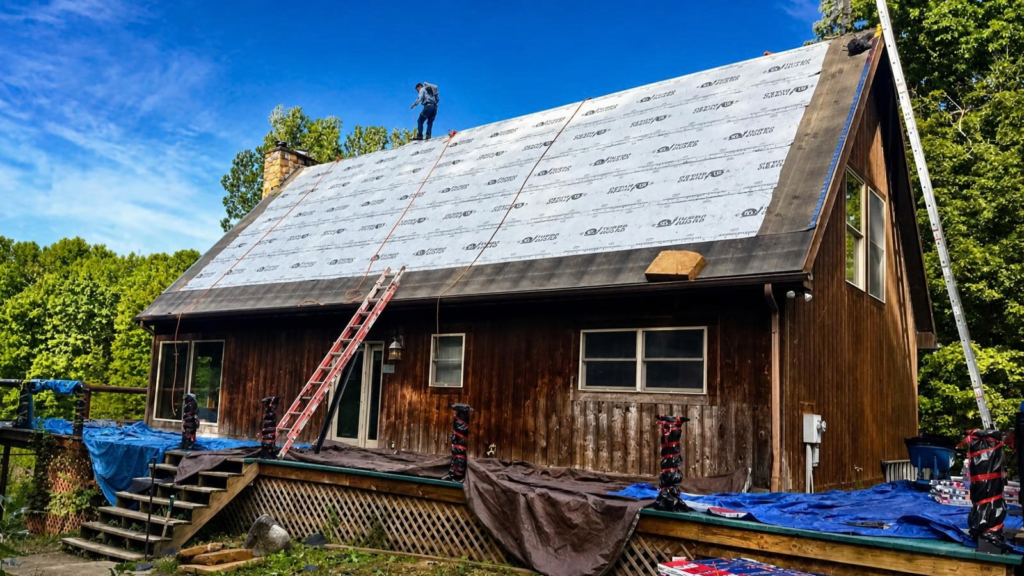
For steep slope roofing Ohio projects, proper underlayment installation helps protect the roof decking while also providing another layer of defense around vulnerable areas.
Additional ice and water protection may be used around eaves, valleys, and penetrations depending on the roof design and project requirements.
The best roofing systems are usually defined by what is underneath as much as what homeowners can see.
Flashing Can Make or Break the Roof
Steep roofs often include more architectural details.
Dormers, chimneys, intersecting walls, valleys, and roof transitions all add character to the home, but they also create potential entry points for water.
Flashing needs to direct water away from these areas rather than simply cover gaps.
During a steep slope roofing Ohio project, flashing should never be treated as a minor finishing detail.
Improper flashing can allow water to enter even when the shingles themselves are in excellent condition.
That is why experienced roofers spend extra time on transitions that may look insignificant from the ground.
Ventilation Still Matters Beneath a Steep Roof
A dramatic roofline may create a larger attic space, but that does not automatically mean the attic is properly ventilated.
Heat and moisture still need a controlled path out of the structure.
Poor attic ventilation can contribute to excessive heat, condensation, damp insulation, and deterioration of roof decking.
A complete steep slope roofing Ohio evaluation should consider:
- Intake ventilation
- Ridge ventilation
- Attic airflow
- Insulation
- Moisture conditions
When replacing the roof, it makes sense to evaluate these hidden systems before new roofing materials cover everything again.
Material Handling Takes More Planning
Imagine trying to keep roofing materials secure on a sharply angled surface.
On a steep roof, bundles cannot simply be placed anywhere.
Crews must carefully plan how materials are loaded, staged, and moved throughout the project.
That extra planning can affect labor and project timelines.
It is another reason estimates for steep slope roofing Ohio properties may differ from seemingly similar homes with simpler rooflines.
The homeowner is not just paying for shingles. The project includes the expertise and additional procedures required to install those materials safely and correctly.
Roof Complexity Can Affect Replacement Cost
Roof size is only one factor in pricing.
A relatively small home with an extremely steep, complicated roof may require more labor than a larger house with a simple design.
Cost factors can include:
- Roof pitch
- Number of valleys
- Dormers
- Chimneys
- Multiple roof levels
- Material type
- Access conditions
- Decking repairs
When comparing steep slope roofing Ohio estimates, homeowners should look beyond the final price and understand what the proposal actually includes.
A detailed estimate should reflect the real complexity of the roofing system.
Steep Roofs Can Deliver Incredible Curb Appeal
There is a reason steep rooflines are so visually striking.
They can add character, depth, and architectural presence to a home.
When paired with the right roofing color and material, a steep roof can become one of the property’s strongest design features.
Architectural shingles can emphasize shadow lines and dimension, while metal roofing can create sharp, clean lines across prominent slopes.
A professionally completed steep slope roofing Ohio project should protect the house while also respecting the architecture that makes the home unique.
Does Your Steep Roof Have the Right Roofing System Behind the Look?
A steep roof may be one of the most beautiful features of your Mount Vernon home, but its appearance is only half the story.
What matters just as much is what you cannot see from the driveway: secure fastening, properly installed underlayment, carefully detailed flashing, strong decking, balanced ventilation, and waterproofed valleys.
So look up at your roof and ask yourself: if one of those high valleys, dormers, or steep sections developed a small problem today, would you know before it became a leak inside your home?
A professional inspection can give you that answer.
Schedule a roof evaluation with Whitt Roofing & Restoration and find out whether your steep-pitched roof is simply beautiful from the ground or truly built to protect your Mount Vernon home through every Ohio season.