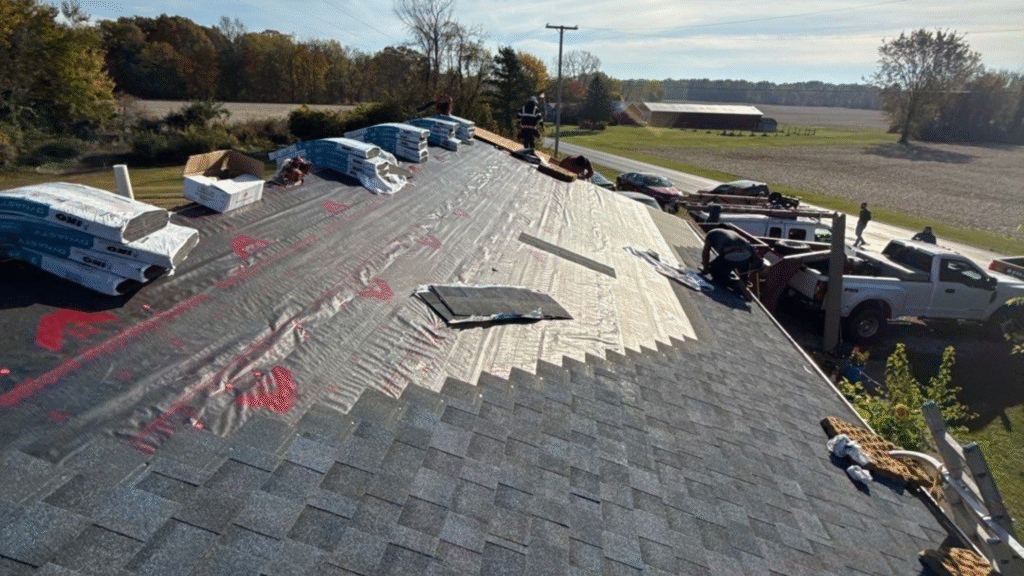
Protect Your Home, Your Investment, and Your Peace of Mind
Your roof is one of the most crucial parts of your home—it protects your structure, your belongings, and your family from the unpredictable Ohio weather. But even the best roofing materials don’t last forever. Shingles deteriorate over time due to age, storms, and UV exposure. And waiting too long to replace your roof can lead to leaks, interior damage, mold growth, or even structural issues.
If you’re reading this, chances are you’re starting to wonder whether it’s time for a shingle roof replacement.
The good news? There are clear warning signs that help you determine whether your roof is near the end of its life. In this guide, we’ll break down the top 7 signs that your home needs a shingle roof replacement before issues become costly or dangerous. We’ll also explain the benefits of replacing your roof, walk through what to expect during the process, and why homeowners in Marengo and Mount Vernon, OH trust Whitt Roofing & Restoration.
Understanding Roof Lifespan — How Long Do Asphalt Shingles Really Last?
Before we get into the signs of roofing failure, it helps to understand how long a typical asphalt shingle roof is supposed to last.
✅ Average Lifespan of an Asphalt Shingle Roof
| Roof Material Type | Expected Lifespan |
| 3-tab asphalt shingles | 15–20 years |
| Architectural shingles | 25–30+ years |
| Premium/impact-resistant shingles | 30–50 years |
However, lifespan can vary widely due to:
- Severe weather (hailstorms, wind damage, ice dams)
- Poor attic ventilation
- Improper installation
- Lack of maintenance
- Sloped vs. low-pitched roofs
Ohio weather—especially in Marengo & Mount Vernon—brings heavy rain, hail, snow, and freeze/thaw cycles, meaning shingles can break down faster than in other parts of the country.
If your roof is 15 years or older, it’s time to start watching closely for replacement signs.
The Top 7 Signs You Need a Shingle Roof Replacement
Here are the seven warning signs that you may need a shingle roof replacement sooner rather than later.
Sign #1: Curled, Cracked, or Missing Shingles
Shingles are built to lie flat, forming a waterproof barrier against rain and snow.
But as shingles age or suffer weather damage, they begin to:
- Curl at the edges
- Warp upward
- Crack or split
- Lift from the roof deck
If shingles are missing completely, your roof is exposed—one wind gust or rainstorm away from interior water damage.
Curled or cracked shingles indicate that the asphalt and adhesive components have broken down from age and UV exposure. Repairs may buy you time, but when this damage spreads across your roof, a full shingle roof replacement becomes the smarter investment.
Sign #2: Granule Loss and Bald Patches
Asphalt shingles are coated in granules to offer:
- UV protection
- Weather resistance
- Fire protection
But over time, those granules loosen and wash into gutters.
Signs of granule loss include:
- Bald patches on the shingles
- Dark spots where the asphalt mat is exposed
- Granules collecting in gutters and downspouts
When granules fall away, shingles deteriorate faster, leaving your roof unprotected from sun and moisture.
Granule loss is one of the most common indicators that a shingle roof replacement is needed—especially if your roof is over 10–15 years old.
Sign #3: Roof Leaks or Water Stains on Ceilings
If you notice:
- Water spots on ceilings
- Brown/yellow interior stains
- Peeling paint near rooflines
- Damp insulation in the attic
…it’s a strong sign your roof is leaking.
Many homeowners assume a leak means they just need a repair. But leaks often indicate larger problems, such as:
- Widespread shingle failure
- Rotting roof decking
- Damaged underlayment
- Flashing deterioration around chimneys or vents
Once water reaches interior spaces, mold can develop in as little as 24 hours.
At this point, patching the issue only delays the inevitable. A replacement is the only long-term solution.
Sign #4: Frequent Repairs or “Spot Fixes” Every Season
A repair here and there is normal. But if you’ve been scheduling roof repairs year after year—especially after each storm—your roof isn’t performing as intended.
If you find yourself repairing:
- Loose shingles
- Shingle blow-offs
- Flashing issues
- Minor leaks
…then it’s time to evaluate cost vs. benefit.
Paying for repairs every year can easily exceed the cost of a shingle roof replacement—and you still end up with an aging roof that will need replacing sooner or later.
Sign #5: Your Roof Is 20+ Years Old (Even If It “Looks Fine”)
Even if you don’t see visible damage, roofing materials break down over time.
After 20–25 years, shingles lose their elasticity and protective oils, making them brittle and vulnerable. Underlayment, flashing, and decking also fail over time.
Aging roofs are also more vulnerable to:
- Ice dams forming along the eaves
- Mold growth in the attic
- Sudden leaks during storms
If your roof is approaching or past its lifespan, scheduling an inspection could save you thousands in future water damage.
Sign #6: Sagging Rooflines or Soft Spots
A sagging roofline is one of the most urgent signs of structural compromise.
This means:
- Moisture has reached the roof decking
- The plywood beneath shingles is rotting
- The structural beams are weakening
Sagging roofs are a safety hazard and require immediate evaluation—no exceptions.
If soft or “spongy” areas are found during an inspection, a full shingle roof replacement plus decking repair will be needed.
Sign #7: Increasing Energy Bills and Poor Home Efficiency
A failing roof directly impacts energy use.
Here’s why:
- Old roofs absorb more heat from the sun
- Damaged shingles allow outside temperatures into your attic
- Poor ventilation traps heat and moisture
This leads to your HVAC system working harder, increasing energy consumption.
By replacing your roof with modern, energy-efficient shingles, you can reduce heating and cooling costs—especially if paired with improved attic ventilation.
Why a Shingle Roof Replacement Is Better Than Repeated Repairs
Many homeowners attempt repairs to save money, but recurring repairs often cost more in the long run—and don’t fix underlying structural problems.
Here’s how a new roof saves money:
| Problem (with repairs) | Solution (with replacement) |
| Leaks and interior damage | Prevents future leaks entirely |
| Heat loss from poor ventilation | Lowers energy bills |
| Home devaluation | Increases resale value by up to 65% ROI |
| Ongoing repair expenses | One-time investment lasting 20–30 years |
If your roof is aging or failing, investing in a shingle roof replacement protects you from:
- Expensive water damage repairs
- Insurance claim denials
- Mold remediation costs
- Emergency storm repairs
Replacing your roof is the ultimate form of preventative maintenance.
What to Expect During the Shingle Roof Replacement Process
Homeowners often ask:
“How disruptive is the replacement process?”
The answer: We make it smooth, efficient, and transparent.
Here’s how Whitt Roofing & Restoration handles a full shingle roof replacement:
Step 1: Roof Inspection and Analysis
We perform:
- Drone and/or on-roof inspection
- Attic moisture and ventilation evaluation
- Assessment of decking and flashing condition
You receive a detailed report with photos—not just roof jargon.
Step 2: Material Selection and Planning
We help you choose:
- Shingle style (architectural, impact-resistant, premium)
- Color that complements your siding and trim
- Ventilation upgrades or gutter improvements
Step 3: Tear-Off of Old Shingles
All old roofing material is removed down to the decking.
We inspect for:
- Rot
- Mold
- Soft spots
Any compromised wood is replaced.
Step 4: Underlayment Installation
We install an ice-and-water shield (required in Ohio), plus a synthetic underlayment for the best moisture protection.
Step 5: New Shingle Installation
Your new shingles are installed using top-tier manufacturer standards and fasteners designed to withstand strong Ohio winds.
Step 6: Job Site Cleanup and Final Inspection
We use special magnetic rollers to remove nails from the property, ensuring safety and cleanliness.
You get a final walkthrough—and we don’t leave until you’re satisfied.
Why Homeowners Choose Whitt Roofing & Restoration
Choosing the right contractor is just as important as choosing the right shingles.
Here’s why Whitt Roofing & Restoration is the top choice for shingle roof replacement in Marengo and Mount Vernon, OH:
✅ Locally Owned and Family Operated
We’re not a national chain or storm-chasing roofing crew. We live here, work here, and stand behind our work.
✅ Quality Craftsmanship — No Half-Measures
Every roof is installed to meet (or exceed) manufacturer and building code standards.
✅ Insurance Claim Assistance
If your replacement may be covered by insurance due to storm damage, we help:
- Document damage
- Meet with adjusters
- Fight denied claims if necessary
✅ Premium Materials — No Builder-Grade Shortcuts
We install Owens Corning, GAF, and CertainTeed products backed by industry-leading warranties.
✅ Transparent Quotes & No Pushy Sales Tactics
We believe in educating homeowners—not pressuring them.
Customer Satisfaction Is Our #1 Priority
Hundreds of Ohio homeowners trust us because:
- We communicate at every step
- We keep work sites clean
- We treat your home like our own
Don’t Wait Until It’s Too Late
Your roof protects your home, your investment, and your peace of mind.
If you are seeing warning signs—including curling shingles, leaks, granule loss, or rising energy bills—it may be time for a shingle roof replacement.
A failing roof doesn’t fix itself. The longer you wait, the more expensive the repairs become.
👉 Get a free inspection and quote today.
📞 Call Whitt Roofing & Restoration
📍 Serving Marengo, Mount Vernon, and surrounding communities in Ohio
Protect your home now—before small roofing issues become big, expensive problems.