Your home’s siding does more than make your property look good—it protects against rain, snow, wind, and pests, while also improving insulation and energy efficiency. But over time, even the best siding can crack, warp, or loosen due to weather exposure or aging materials.
When that happens, you might wonder whether DIY siding repairs is a safe and cost-effective solution or if it’s time to call in a professional. The truth? It depends on the type of damage, your skill level, and the materials involved.
This comprehensive guide will walk you through when a homeowner can handle siding repairs themselves and when professional help is the smarter, safer, and longer-lasting choice.
Understanding the Purpose and Function of Your Siding
Before diving into repairs, it’s important to understand what your siding actually does and why maintaining it matters.
What Siding Really Protects
Your home’s siding is more than decoration—it’s a protective barrier against the elements. Quality siding shields your walls and insulation from:
- Water intrusion, which can lead to rot or mold growth
- Wind damage, especially during Ohio’s strong spring storms
- Insects or pests, which often find their way in through cracks or gaps
- Heat loss, which can increase energy bills and decrease comfort
When your siding is damaged, your home becomes vulnerable to leaks, structural damage, and costly repairs. Addressing problems early—whether through DIY siding repairs or by hiring a contractor—helps you avoid bigger issues down the line.
Common Causes of Siding Damage
Siding problems in Marengo, Mount Vernon, and central Ohio often come from:
- Hail and storm damage (impact dents, cracks, or holes)
- Moisture buildup due to poor caulking or improper installation
- Warping from prolonged sun exposure or heat
- Loose panels caused by strong winds
- Rot and mold in wood siding
- Insect infestations (especially carpenter ants or termites)
The key is identifying the type and severity of the problem before deciding whether it’s a DIY-friendly fix or something better handled by professionals.
When DIY Siding Repairs Is a Good Option
Some siding issues are small enough that a handy homeowner can fix them with basic tools and a bit of patience.
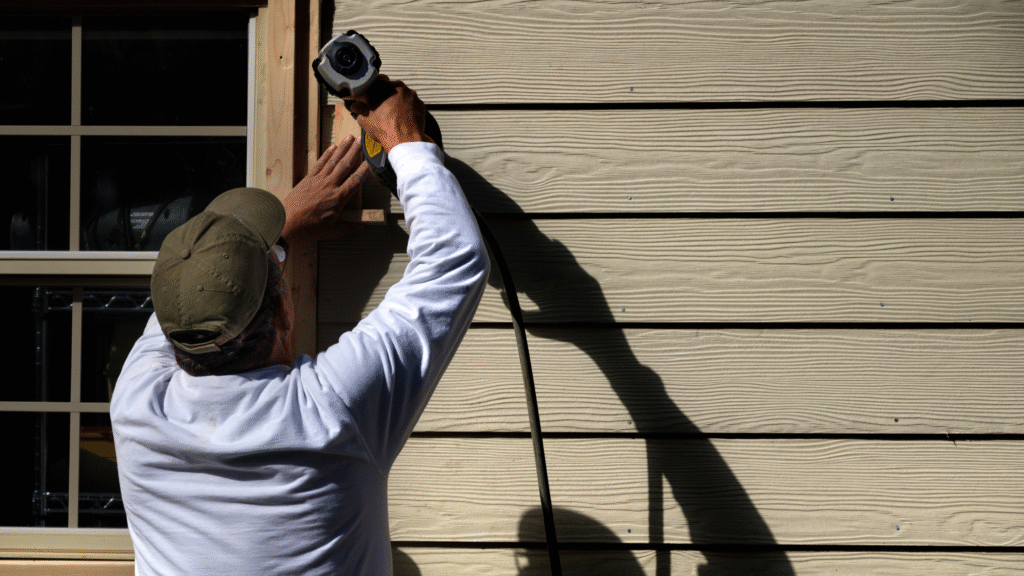
If you’re comfortable using a ladder, measuring tools, and a hammer or nail gun—and have a few hours to spare—you may be able to handle minor DIY siding repairs without calling a pro.
Here’s when it makes sense to take matters into your own hands:
1. Small Cracks or Holes
Hairline cracks or nail holes can often be repaired using color-matched caulk or patching material.
DIY Fix:
- Clean the damaged area thoroughly.
- Fill cracks with high-quality exterior caulk or siding patch.
- Smooth it out and allow it to cure completely.
- Touch up with matching paint or siding sealant if necessary.
This type of repair is inexpensive and effective for maintaining appearance and protection—especially for vinyl or fiber cement siding.
2. Reattaching Loose Panels
Strong Ohio winds can loosen vinyl siding panels, causing them to rattle or flap.
DIY Fix:
- Inspect for any broken locking tabs or nails.
- Re-secure the panel using a zip tool to snap it back into place.
- Replace any missing fasteners, but avoid nailing too tightly, which can prevent expansion and contraction.
As long as the underlying wall isn’t damaged, this fix is simple and requires no special expertise.
3. Replacing a Small Section of Siding
If a single piece of siding is cracked, warped, or dented—but the rest of your exterior is in good shape—you can often replace just that panel.
DIY Fix:
- Purchase replacement panels that match your existing siding in color and texture.
- Use a siding removal tool to detach the damaged section.
- Cut and install the new panel, locking it into place.
- Check alignment and ensure all seams are sealed.
This is one of the most common DIY siding repairs tasks, particularly for vinyl siding, which is designed with overlapping joints that allow for individual piece replacement.
4. Minor Caulking and Sealing
Over time, caulking around windows, doors, and seams can dry out and crack, allowing moisture to sneak behind your siding.
DIY Fix:
- Remove old, deteriorated caulk using a putty knife.
- Apply fresh, weatherproof exterior caulk along joints.
- Smooth it evenly for a watertight seal.
This simple maintenance step can significantly extend your siding’s lifespan and is perfect for weekend warriors who like hands-on home care.
5. Touch-Up Painting or Cleaning
If your siding is dirty or faded, a professional-grade cleaning or touch-up paint job can restore its shine.
DIY Fix:
- Wash vinyl or fiber cement siding using a soft brush and mild detergent.
- Avoid pressure washers unless you’re confident in handling them—they can force water under panels.
- For painted siding, sand and repaint small scuffed areas with color-matched paint.
Regular cleaning can add years to your siding’s life and prevent mold or mildew buildup, especially in humid Ohio summers.
When to Call a Professional for Siding Repair
While DIY siding repair can save money on small jobs, there are times when calling an expert is not only wise—it’s essential.
Siding is your home’s first line of defense. When repairs are beyond surface-level or involve structural damage, hiring experienced contractors like Whitt Roofing & Restoration ensures the job is done safely and correctly.
Here are signs that it’s time to call in a professional:
1. Widespread or Deep Cracks
If multiple panels are cracked or damaged, it’s often a sign of underlying structural or installation issues. Simply patching visible damage won’t address the root cause.
Professionals can assess whether moisture has entered behind the siding, causing rot, warping, or insulation damage—and perform comprehensive repairs that prevent future issues.
2. Soft Spots, Bubbling, or Warping
If sections of your siding feel soft to the touch or appear bubbled, there’s likely trapped moisture beneath the surface.
This issue can’t be fixed with sealant or spot repairs—it requires inspection and possibly full panel replacement. Leaving moisture issues unresolved can lead to mold, wood rot, or compromised sheathing.
3. Mold or Mildew Growth
Dark streaks or mold on siding may indicate poor ventilation, leaking gutters, or deeper water intrusion problems.
A professional inspection helps determine whether the issue is surface-level or affecting the home’s framing. Mold can spread rapidly, making early intervention critical.
4. Storm or Impact Damage
Central Ohio experiences heavy storms and high winds. Flying debris, hail, or fallen tree branches can cause dents, holes, or cracks that go beyond what DIY siding repairs can handle.
Insurance may cover storm-related damage—but only if you have documentation from a licensed contractor. Whitt Roofing & Restoration specializes in storm damage restoration and can provide inspections, estimates, and insurance support.
5. Rot or Pest Infestation
Wood siding is especially vulnerable to rot and insect damage. Once pests or decay set in, you need professional repair to remove compromised material and prevent further spread.
6. Multiple Layers of Damage
When siding has been repaired multiple times over the years, there may be hidden problems beneath. Professionals can remove the old siding, inspect the underlying sheathing, and replace it correctly—restoring structural integrity and curb appeal.
DIY vs. Professional Siding Repair — A Cost and Quality Comparison
Before deciding between DIY siding repair and professional service, it helps to compare the differences in time, cost, and quality.
| Factor | DIY Siding Repairs | Professional Siding Repair |
| Cost | Lower upfront costs (materials only) | Higher upfront costs (materials + labor) |
| Time | Depends on experience and tools | Typically completed faster |
| Quality | Varies based on skill level | Guaranteed workmanship and warranty |
| Risk | Potential for errors, leaks, or mismatched panels | Proper installation prevents long-term issues |
| Warranty | None for self-repair | Manufacturer and workmanship warranties included |
| Safety | Risk of ladder injuries or falls | Trained crews with safety equipment |
Hidden Costs of DIY Repairs
While DIY projects can save money initially, mistakes often cost more later. Improper installation or sealing can lead to water infiltration, requiring full siding replacement or interior repairs.
If you plan to sell your home in the next few years, professional siding repair provides documentation and peace of mind for potential buyers—something DIY work can’t always guarantee.
When Quality Trumps Savings
For small fixes, DIY siding repairs is practical and rewarding. But for anything involving large areas, storm damage, or structural concerns, the expertise of a certified siding contractor ensures long-term durability and protection.
Why Homeowners in Marengo & Mount Vernon Choose Whitt Roofing & Restoration
When it comes to your home’s exterior, quality and trust matter. Whitt Roofing & Restoration has become a go-to name for homeowners across Marengo, Mount Vernon, and Central Ohio seeking reliable, top-tier siding and roofing solutions.
Here’s why more homeowners are choosing Whitt for siding repairs and replacements:
1. Local Expertise You Can Trust
As a locally owned company, we understand the unique weather patterns, building codes, and siding challenges faced by Ohio homeowners. From heavy rains to freezing winters, our team knows how to protect your home year-round.
2. Certified and Experienced Professionals
Our siding specialists are fully licensed and trained to work with vinyl, fiber cement, wood, and composite materials. Whether it’s a simple repair or a full siding replacement, every project meets industry-leading standards for quality and safety.
3. Honest Assessments and Transparent Pricing
We believe in education, not pressure. Our team thoroughly inspects your home and explains your options clearly—so you can make the right decision for your budget and goals. Every estimate is detailed, honest, and free of hidden costs.
4. Comprehensive Exterior Services
We’re not just siding experts—we also handle roofing, gutters, storm restoration, and more, giving you a one-stop solution for exterior home maintenance. A cohesive system means your siding works seamlessly with your roof and drainage systems.
5. Warranty-Backed Workmanship
Every project we complete is backed by strong manufacturer warranties and our own workmanship guarantee. You can rest easy knowing your investment is protected long after the project is done.
6. 5-Star Customer Reviews
Our reputation speaks for itself. Homeowners in Mount Vernon and Marengo consistently praise our professionalism, communication, and craftsmanship. We take pride in delivering results that exceed expectations.
Final Thoughts: Striking the Right Balance Between DIY and Professional Repairs
When it comes to maintaining your home’s exterior, DIY siding repairs can be a great way to tackle small issues, save money, and feel more connected to your home. For minor cracks, loose panels, or caulking jobs, a little effort goes a long way.
However, larger problems—especially those involving moisture, storm damage, or structural concerns—require professional attention. Hiring an experienced siding contractor like Whitt Roofing & Restoration ensures that your home remains safe, energy-efficient, and beautiful for years to come.
Whether you’re planning a small fix or a full siding upgrade, you deserve to work with a company that values honesty, craftsmanship, and local community.
Call Whitt Roofing & Restoration today for a free siding inspection and quote in Marengo, Mount Vernon, or anywhere in Central Ohio.